
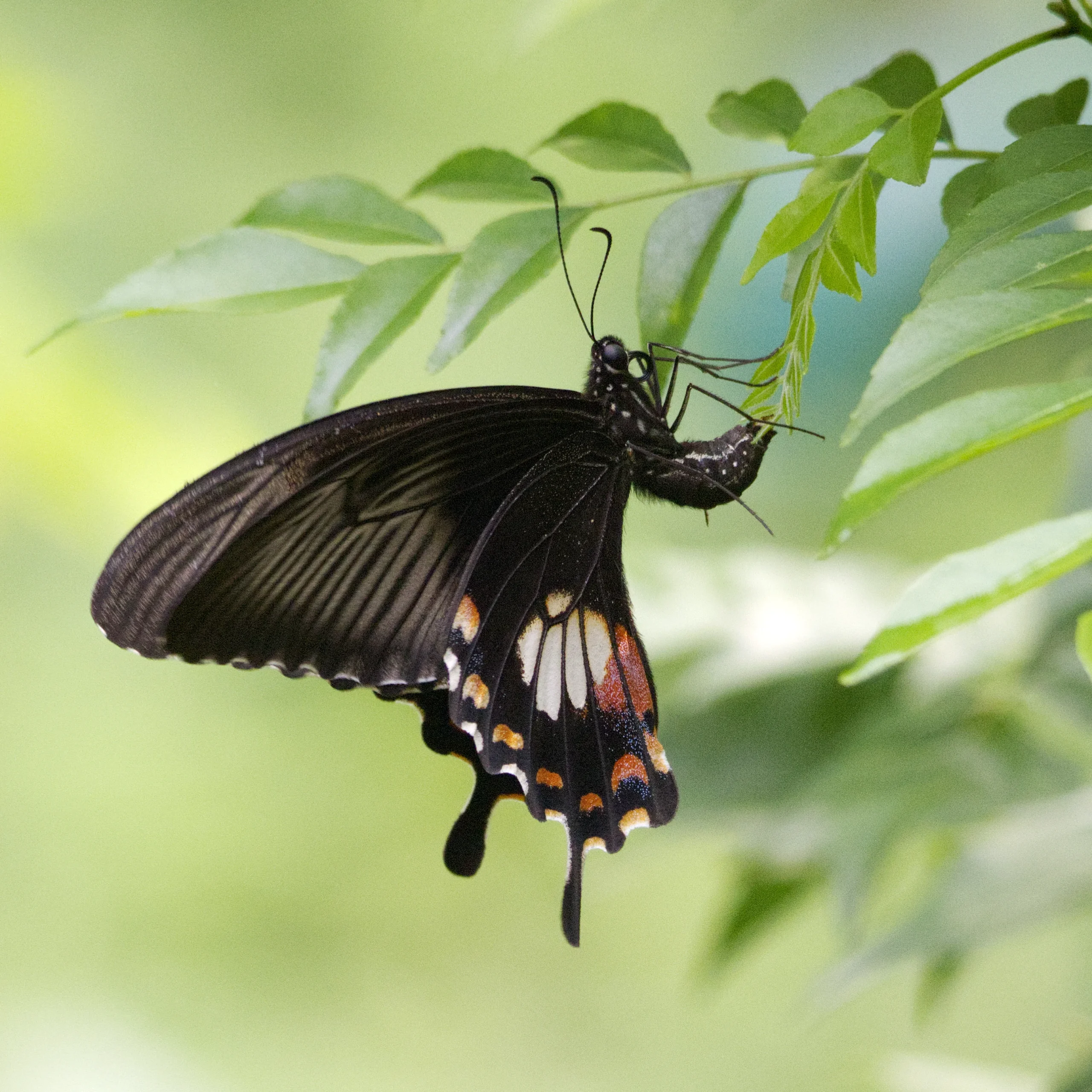
Common Rose
A medium-sized swallowtail butterfly recognized by its velvety black wings, white hindwing patches, and striking crimson marginal spots. The species is a classic example of chemical defense-driven aposematism; larvae feed on Aristolochia spp., sequestering aristolochic acids that render adults distasteful to predators. Common in gardens, secondary forests, wetlands, and semi-urban landscapes across Northeast India. A strong, graceful flier often observed gliding at mid-canopy level or nectaring on flowering shrubs.
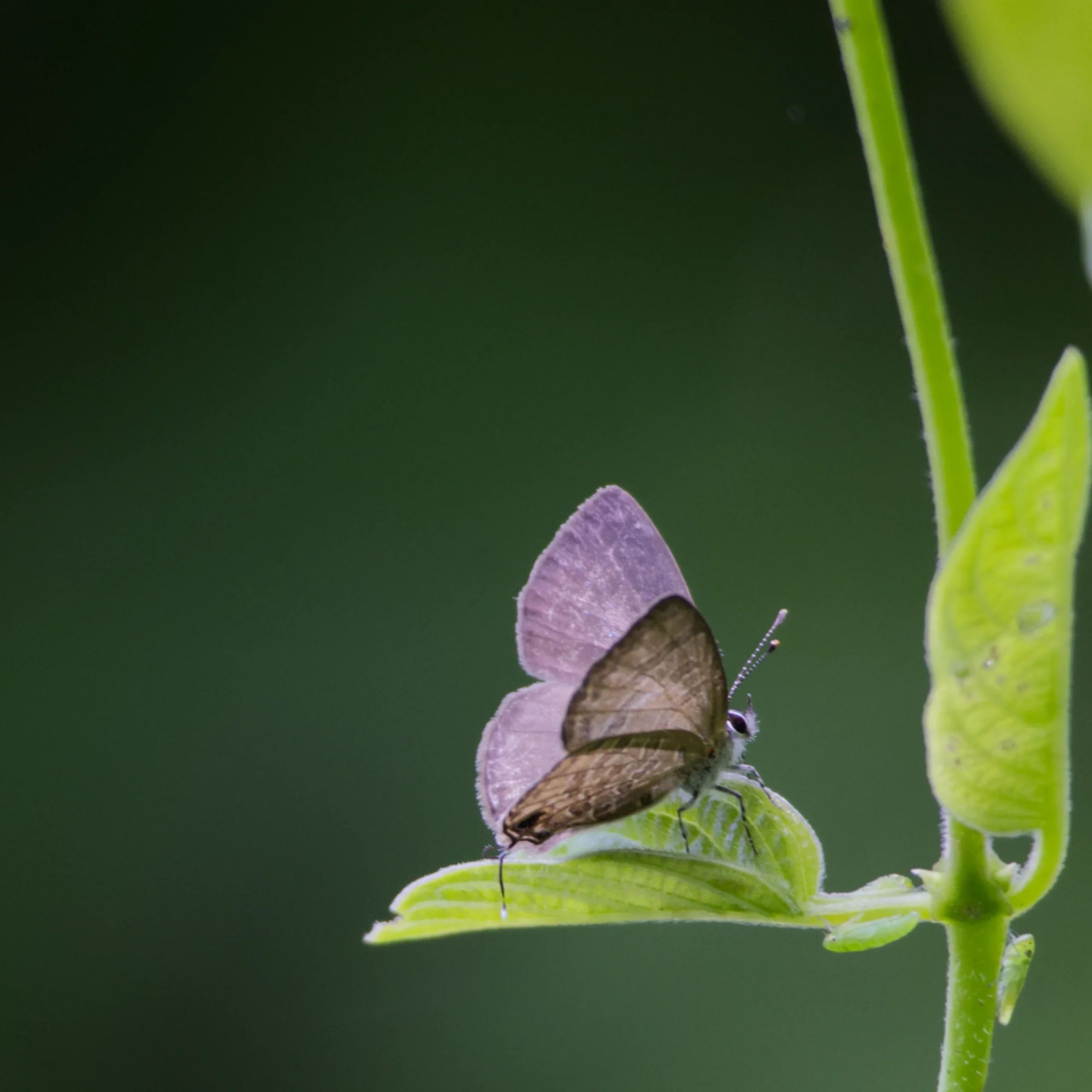
Common Hedge Blue
A small lycaenid butterfly exhibiting soft violet-blue upperwings in males and brownish undersides with fine markings. Common in gardens, hedgerows, and forest edges. Larvae often associate with Fabaceae and may show ant interactions (myrmecophily). A widespread and adaptable species contributing significantly to pollinator diversity.
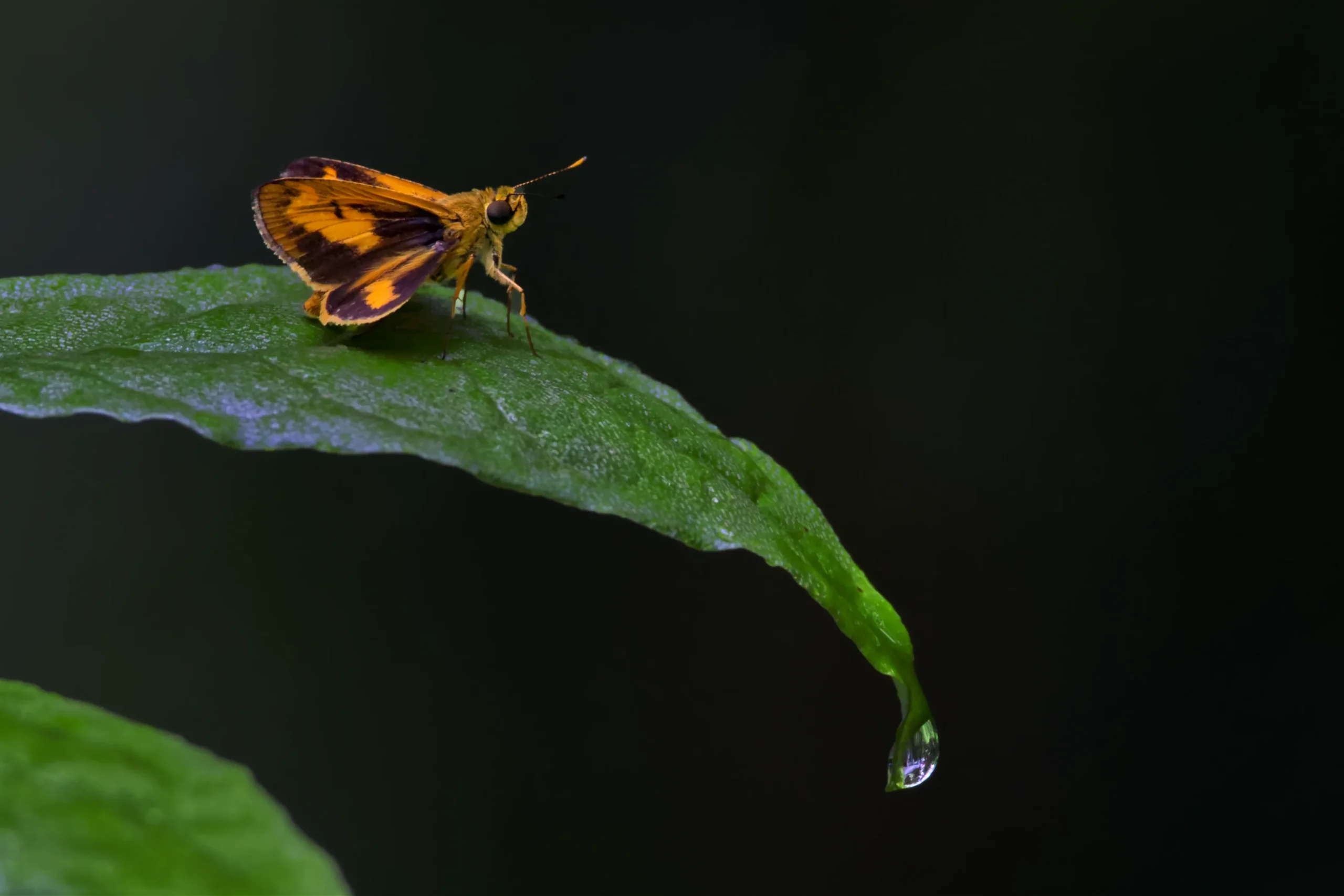
Indian Skipper
A small, fast-flying grass skipper distinguished by its vivid orange forewings with dark brown markings. Typically found in open grasslands, tea estates, and secondary vegetation. Adults frequently bask on low foliage and are active during sunny periods. Larvae feed primarily on grasses, making them important components of agro-ecosystem biodiversity.