
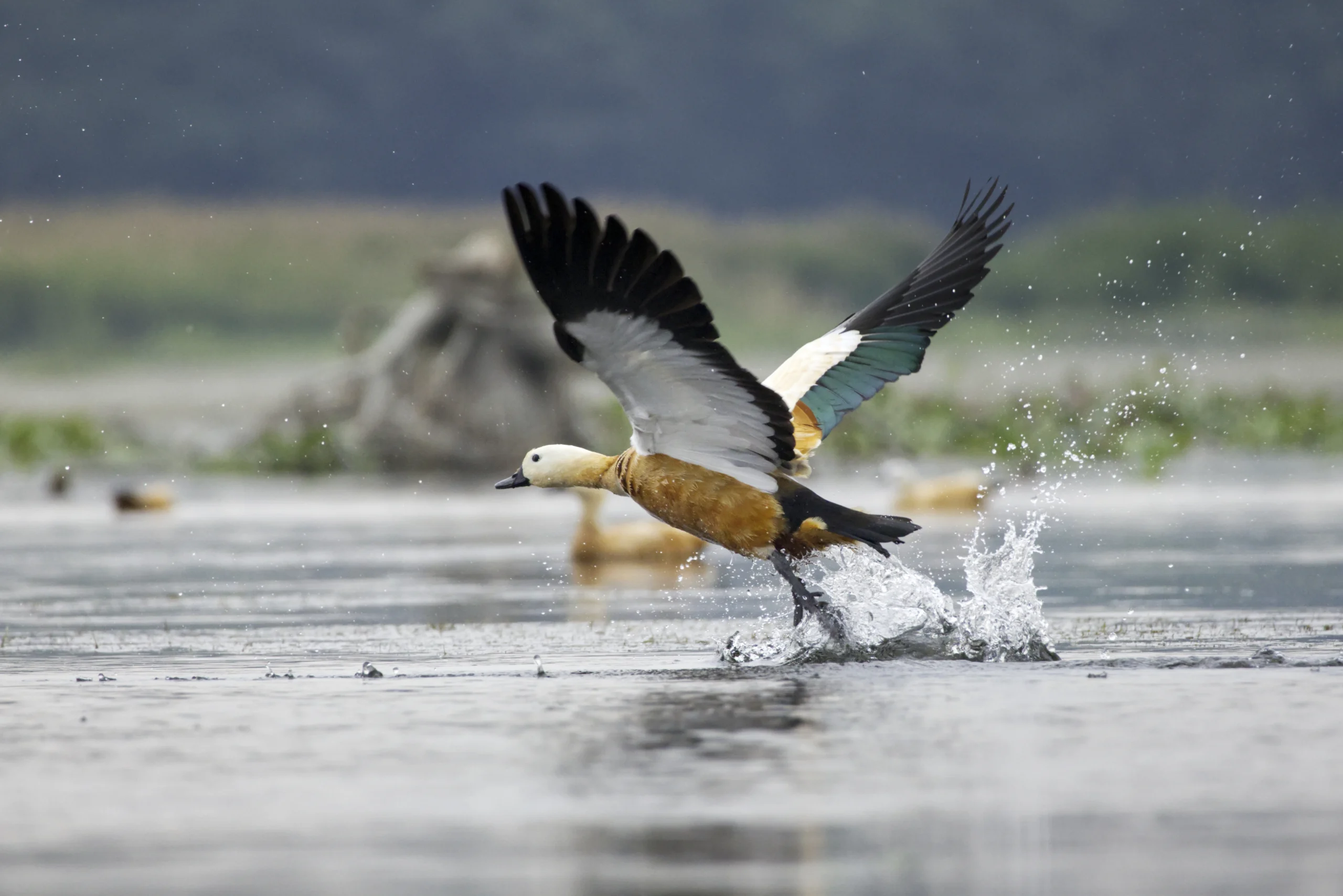
Ruddy Shelduck
A large orange-brown waterfowl with contrasting pale head. Common winter visitor to wetlands and riverbanks.
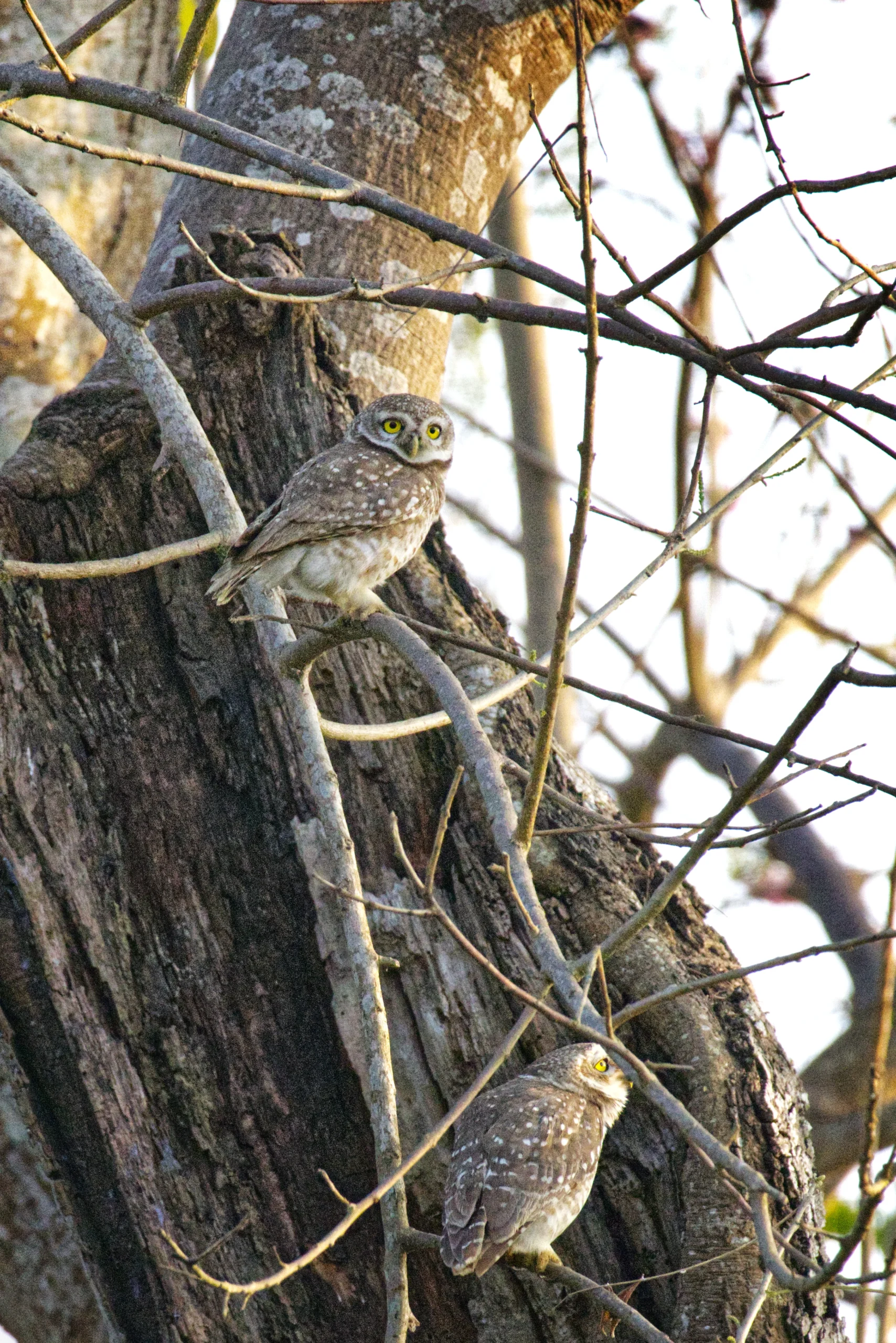
Spotted Owlet
A small, compact owl with a rounded head, bright yellow eyes, and prominent white spotting across the crown, back, and wings. The underparts are pale with fine brown barring. Unlike the Asian Barred Owlet, the spotting on the upperparts is distinct and conspicuous. Common in open woodlands, agricultural landscapes, village groves, and urban tree cover. Frequently nests in tree holes or old structures.
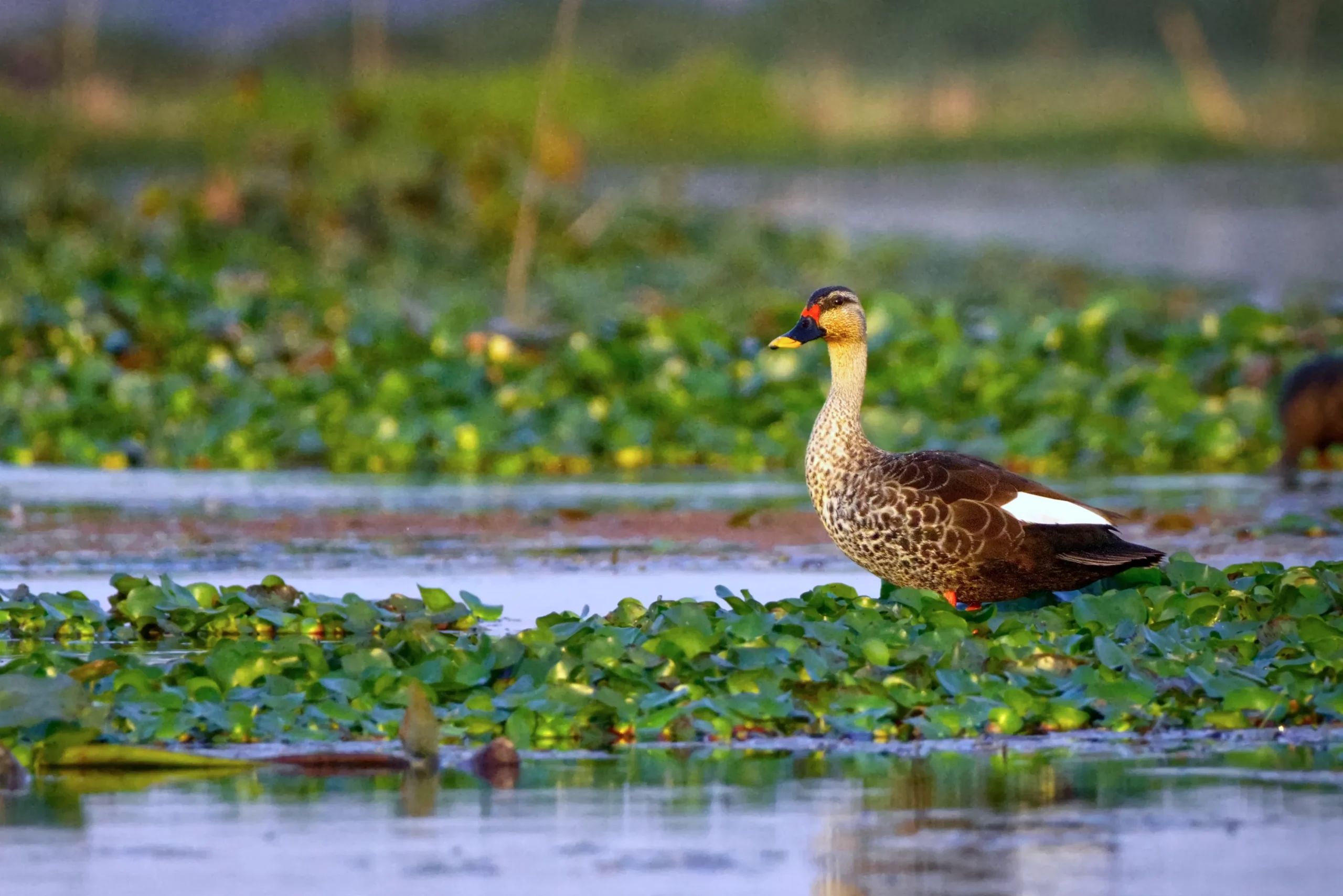
Spot Billed Duck
A resident dabbling duck identifiable by its dark bill with yellow tip and red spot at the base. Found in lakes, marshes, and slow-moving waters.
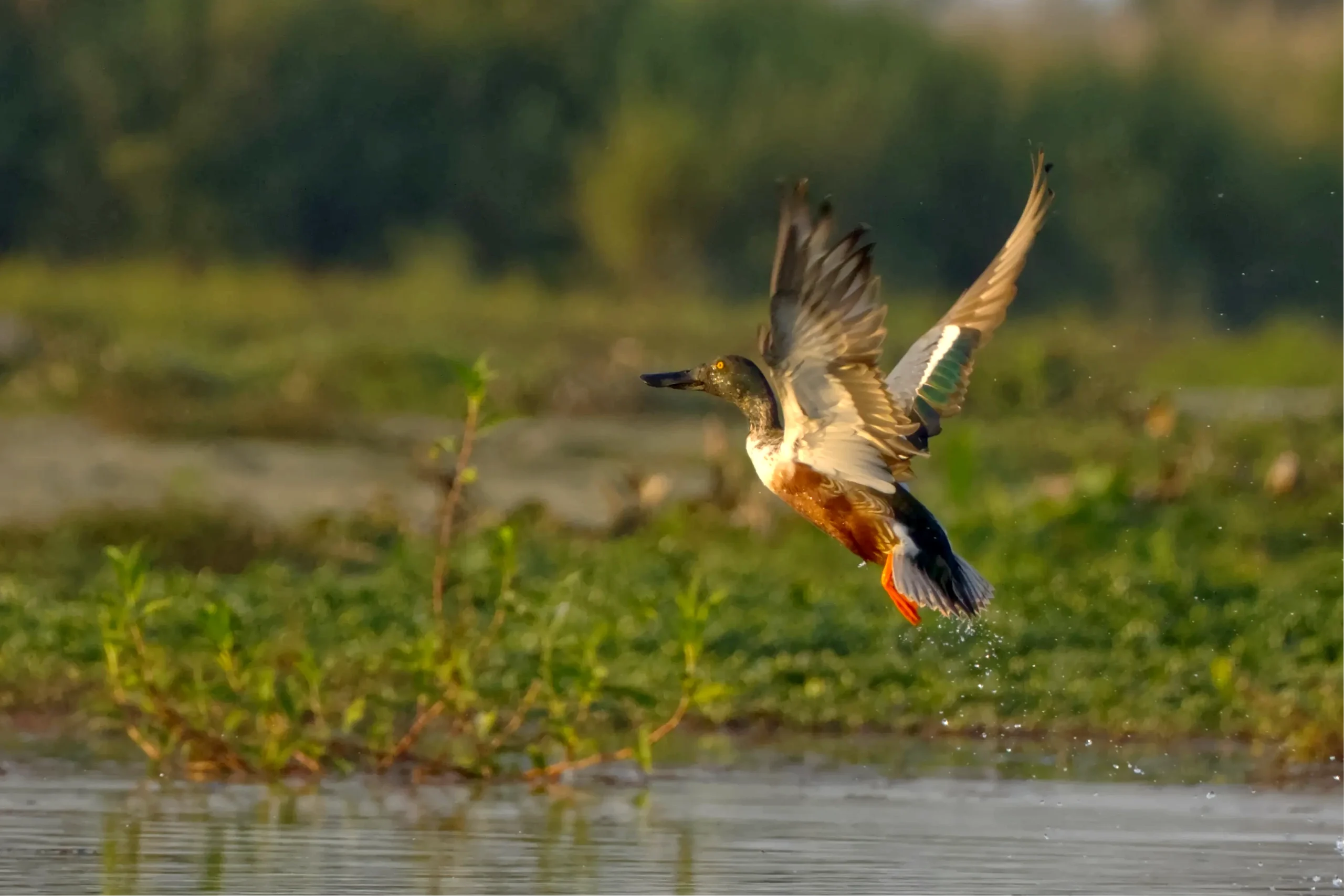
Nothern Shoveler
A dabbling duck recognised by its broad, spatulate bill adapted for filter feeding in shallow water.
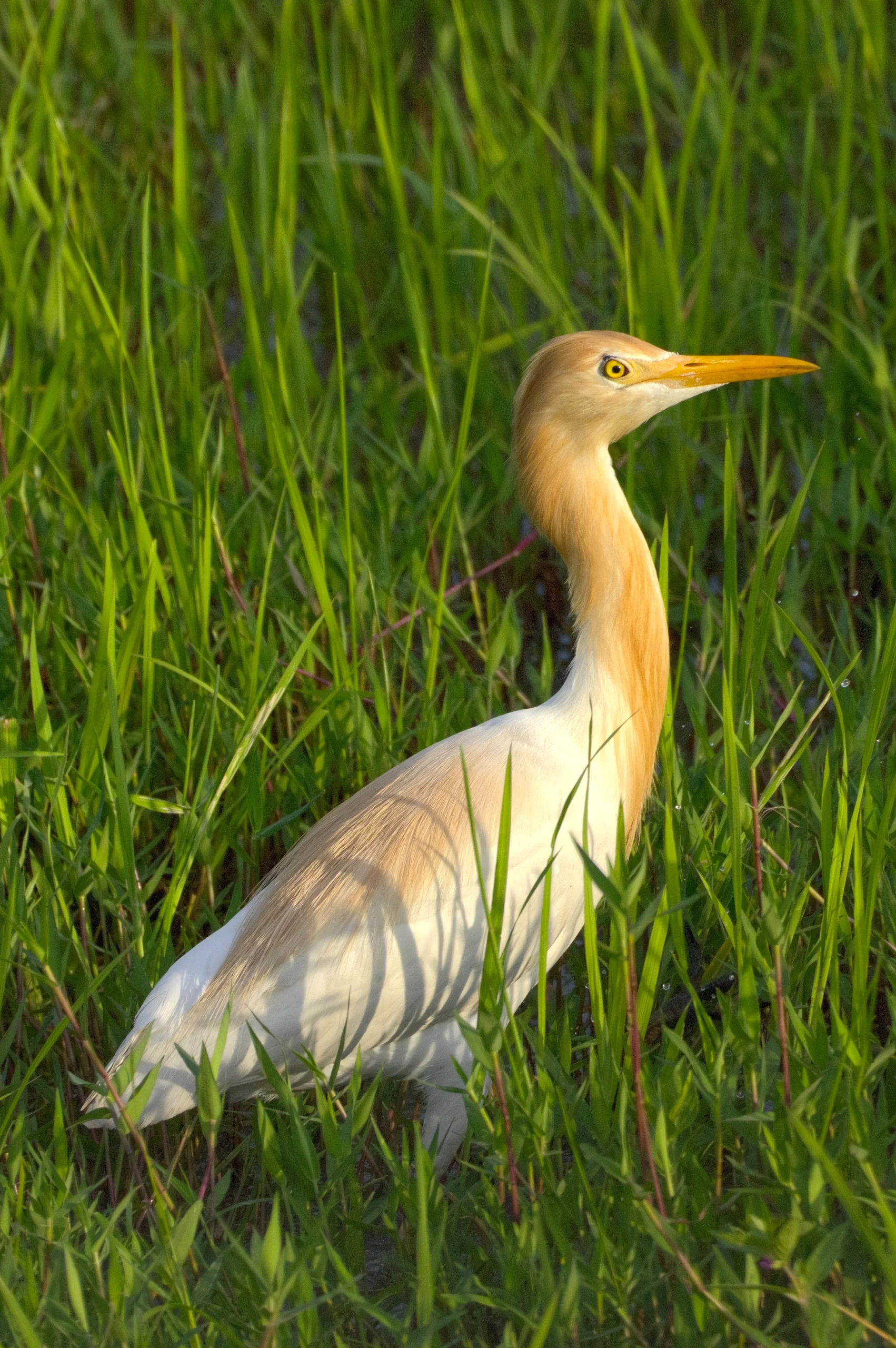
Eastern Cattle Egret Breeding Adult
A small white heron commonly associated with open grasslands and grazing livestock. In breeding plumage, individuals develop buff-orange patches on the head, chest, and back. Frequently observed in agricultural landscapes and wetland margins where it feeds on insects and small vertebrates disturbed by larger animals.
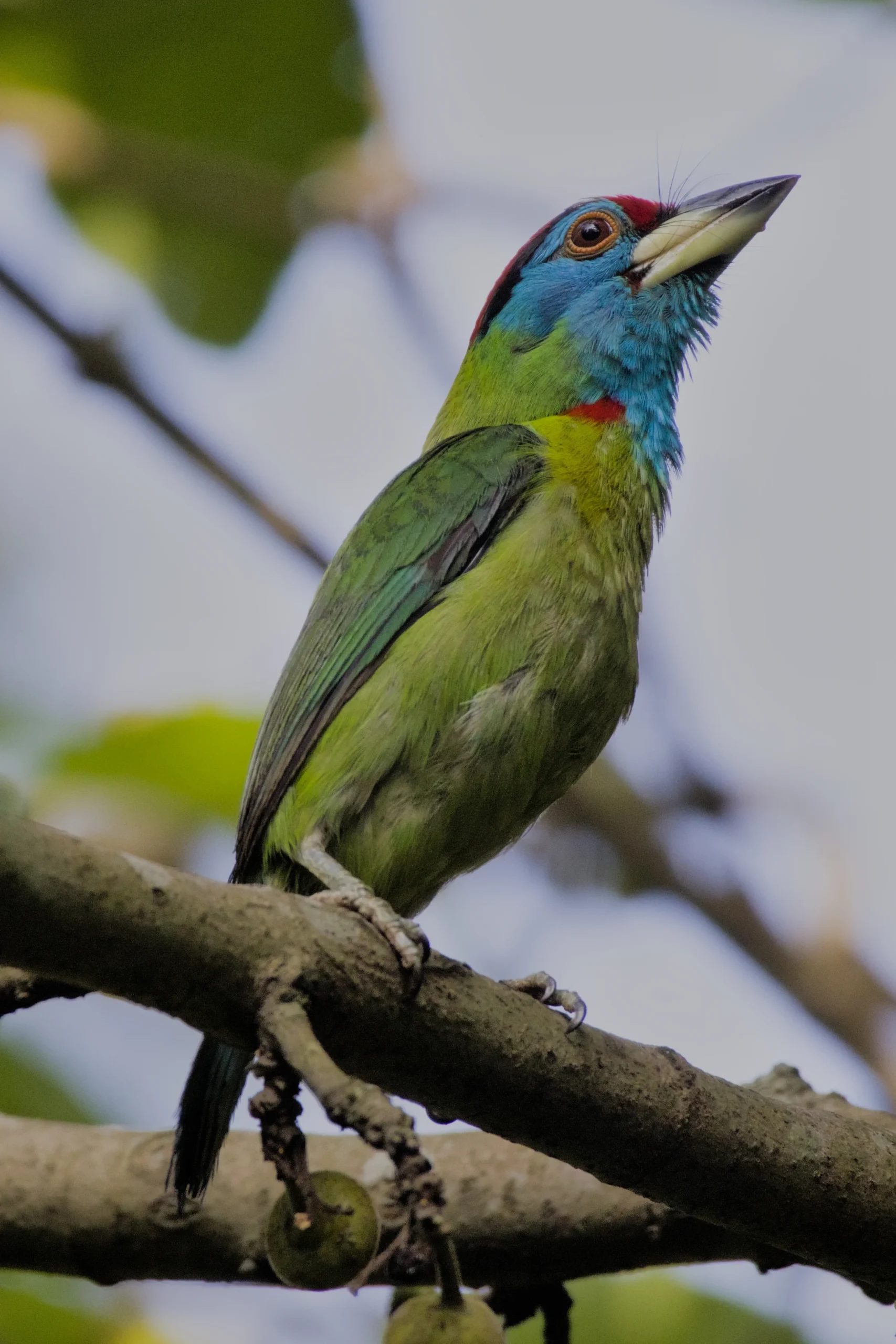
Blue Throated Barbet
A robust frugivorous barbet with green plumage and a distinctive blue throat and face pattern. Typically inhabits wooded areas and plantations.
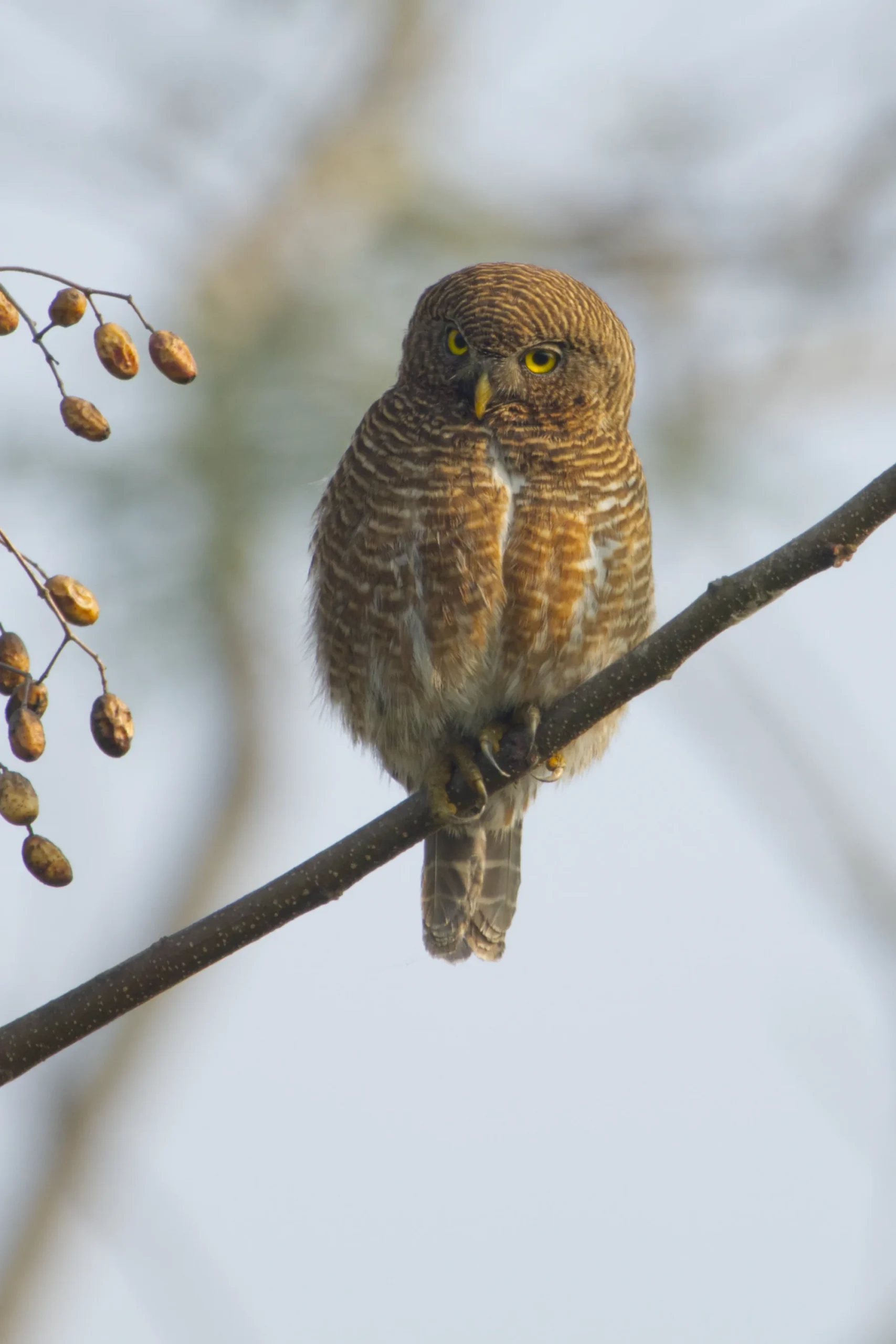
Asian Barred Owlet
A small, compact owl distinguished by its rounded head (without ear tufts), bright yellow eyes, and heavily barred brown-and-white plumage. The underparts show dense horizontal barring, while the crown is finely streaked. The facial disc is subtle, lacking strong contrast. Common resident in woodland, secondary forests, tea estates, and rural tree cover. Frequently perches openly on branches, making it easier to observe compared to many nocturnal owls.
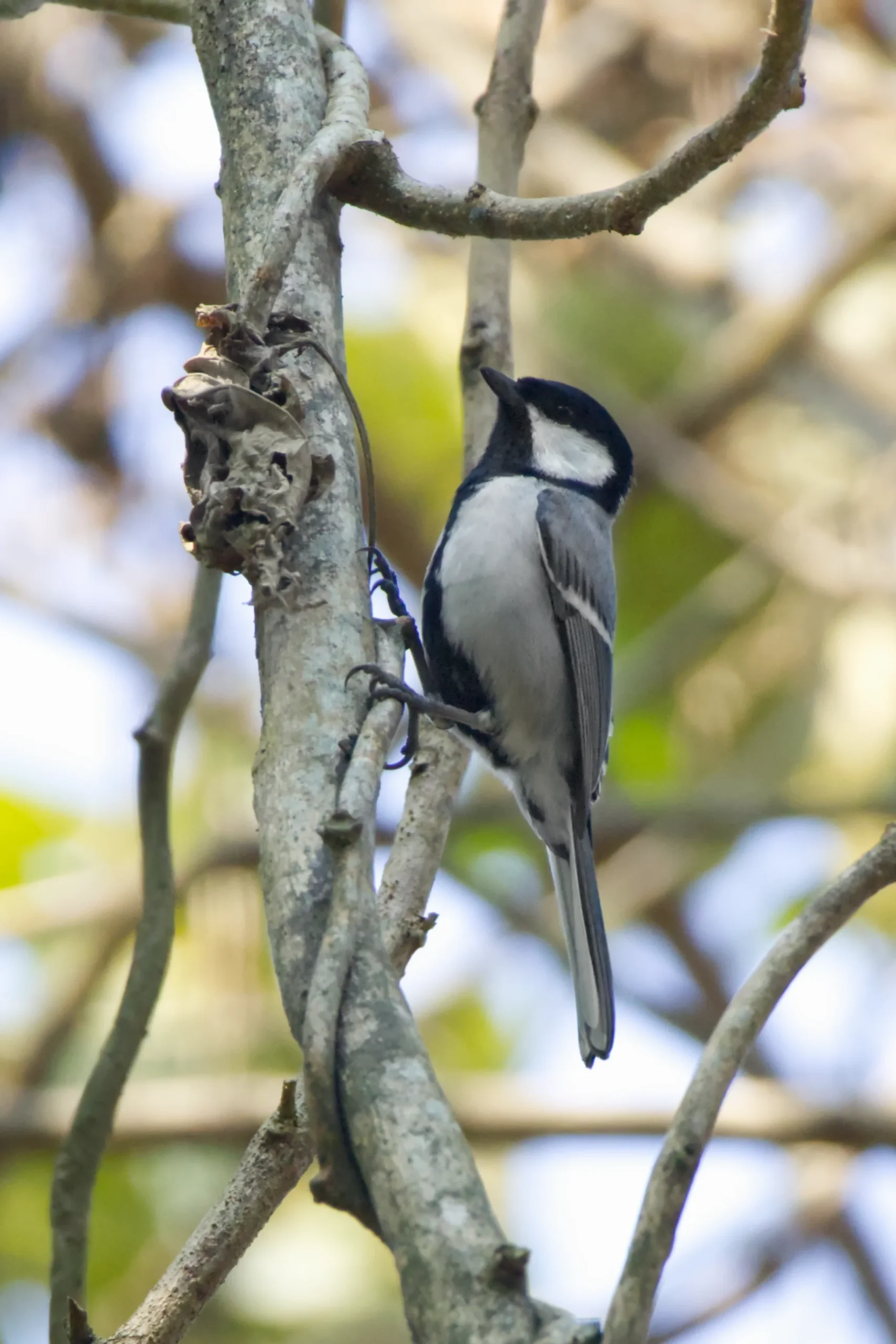
Cinereous Tit
A small insectivorous passerine characterised by a black head and throat, white cheek patches, and grey upperparts. Frequently encountered in tree canopies and semi-urban woodlands.
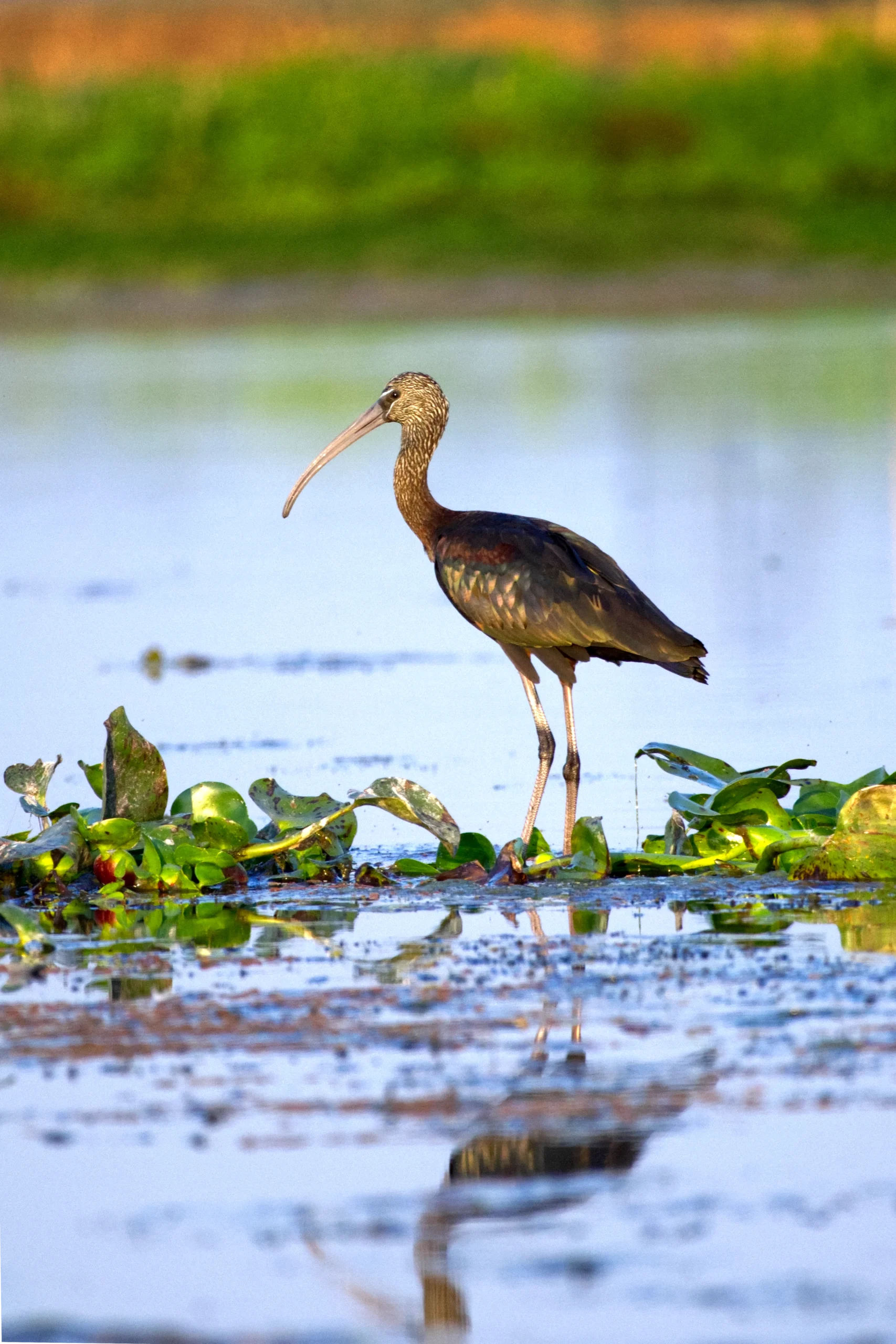
Glossy Ibis
A medium-sized wading bird characterised by dark chestnut plumage with metallic green and bronze iridescence, and a long, slender, down-curved bill. Typically recorded in shallow wetlands, marshes, and flooded fields where it probes soft substrates for invertebrates. Occurs in both resident and migratory populations across suitable habitats.
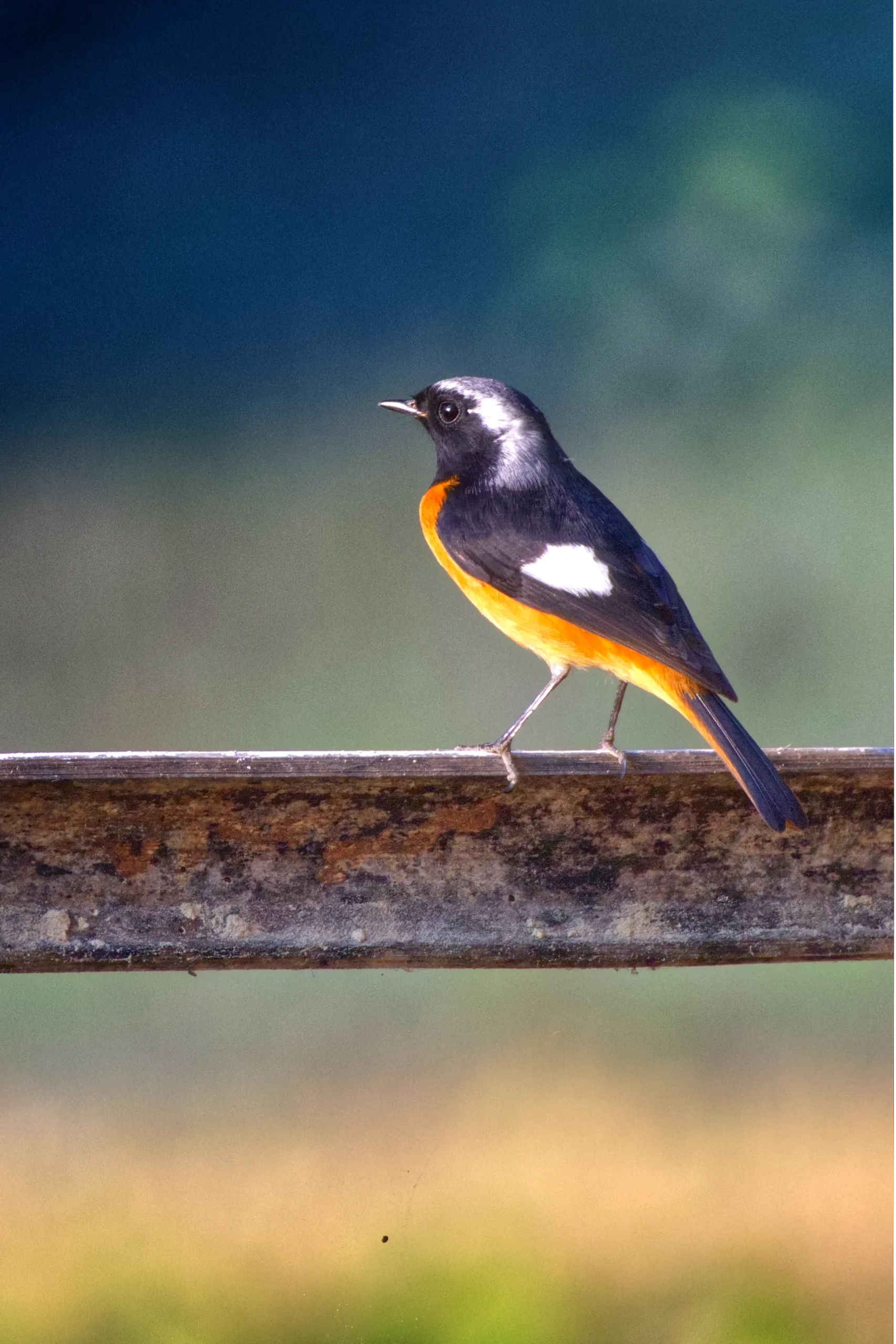
Daurian Redstat
A winter migratory chat distinguished by its bright rufous tail and strong sexual dimorphism. Males exhibit a dark face and throat contrasting with orange underparts, while females are grey-brown with a characteristic rufous tail. Commonly observed in open woodland edges, gardens, and semi-urban landscapes during the non-breeding season.
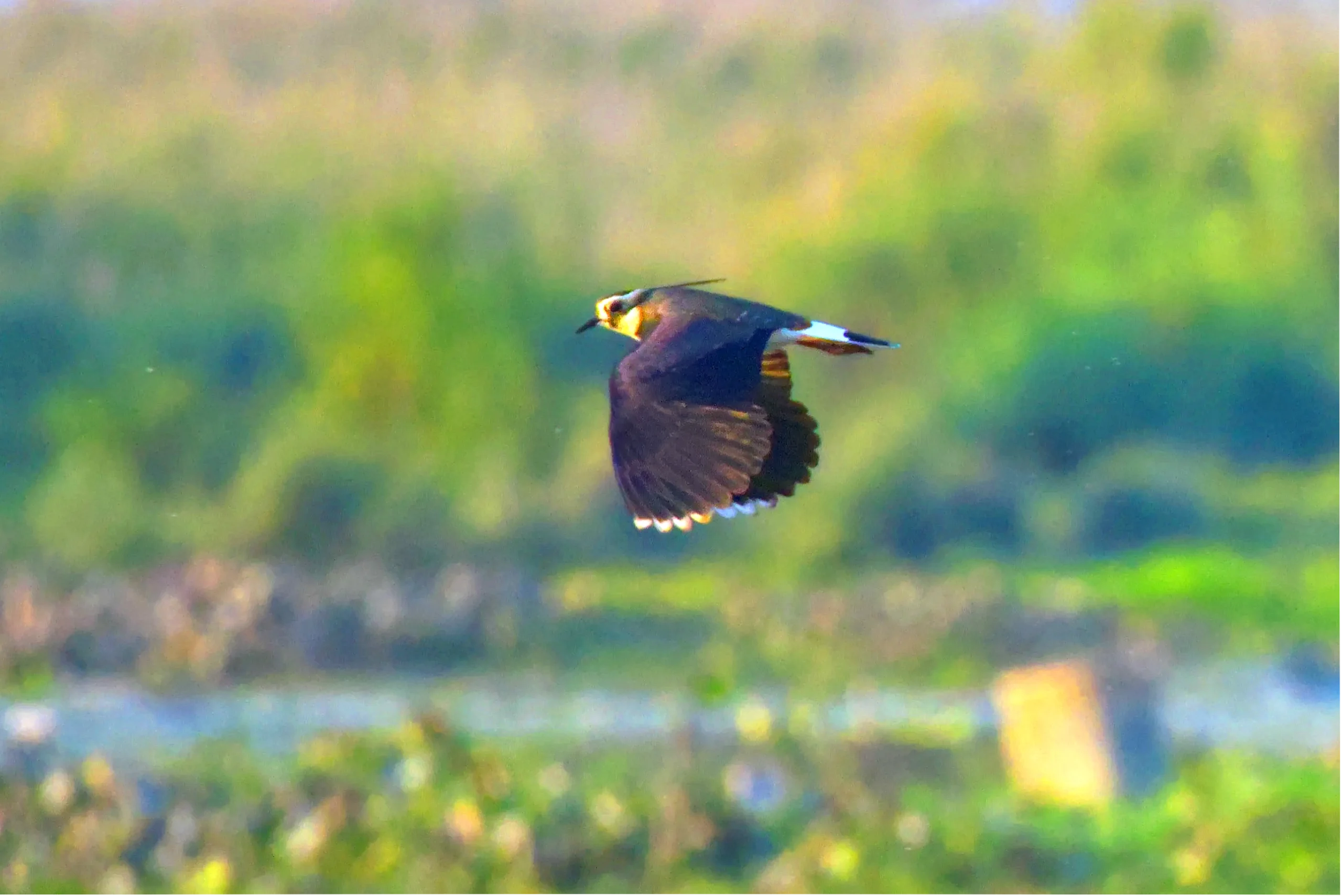
Nothern Lapwing
A migratory plover with iridescent plumage and distinctive crest. Commonly recorded in open wetlands and agricultural areas during winter.
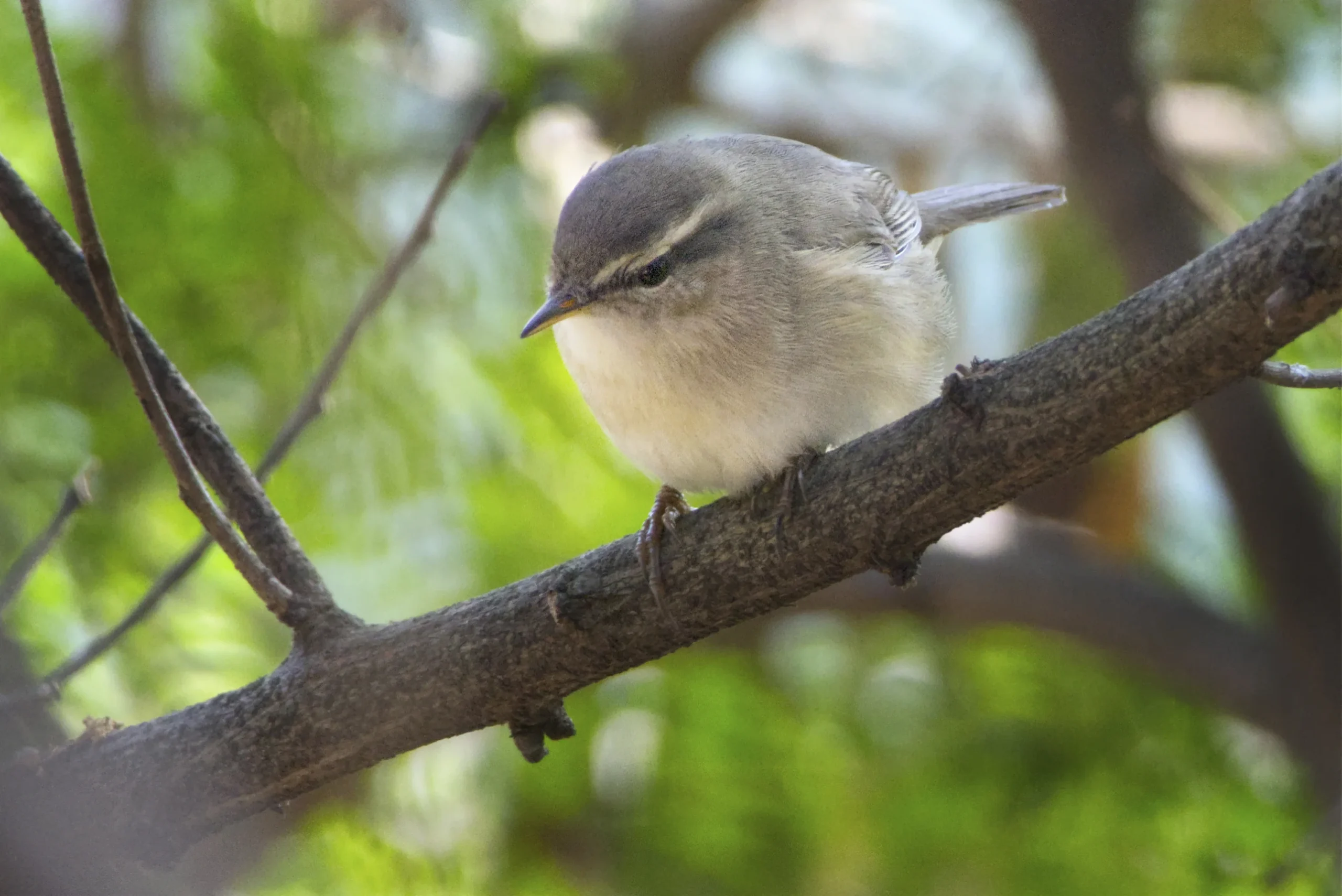
Dusky Warbler
A small, leaf-warbler characterized by its warm brown upperparts and pale buff underparts. It shows a distinct pale supercilium (eyebrow stripe) extending beyond the eye, a fine dark eye-stripe, and a relatively long, pale lower mandible. The legs are typically dark. Compared to similar Phylloscopus species, it appears more uniformly brown with less greenish tones.
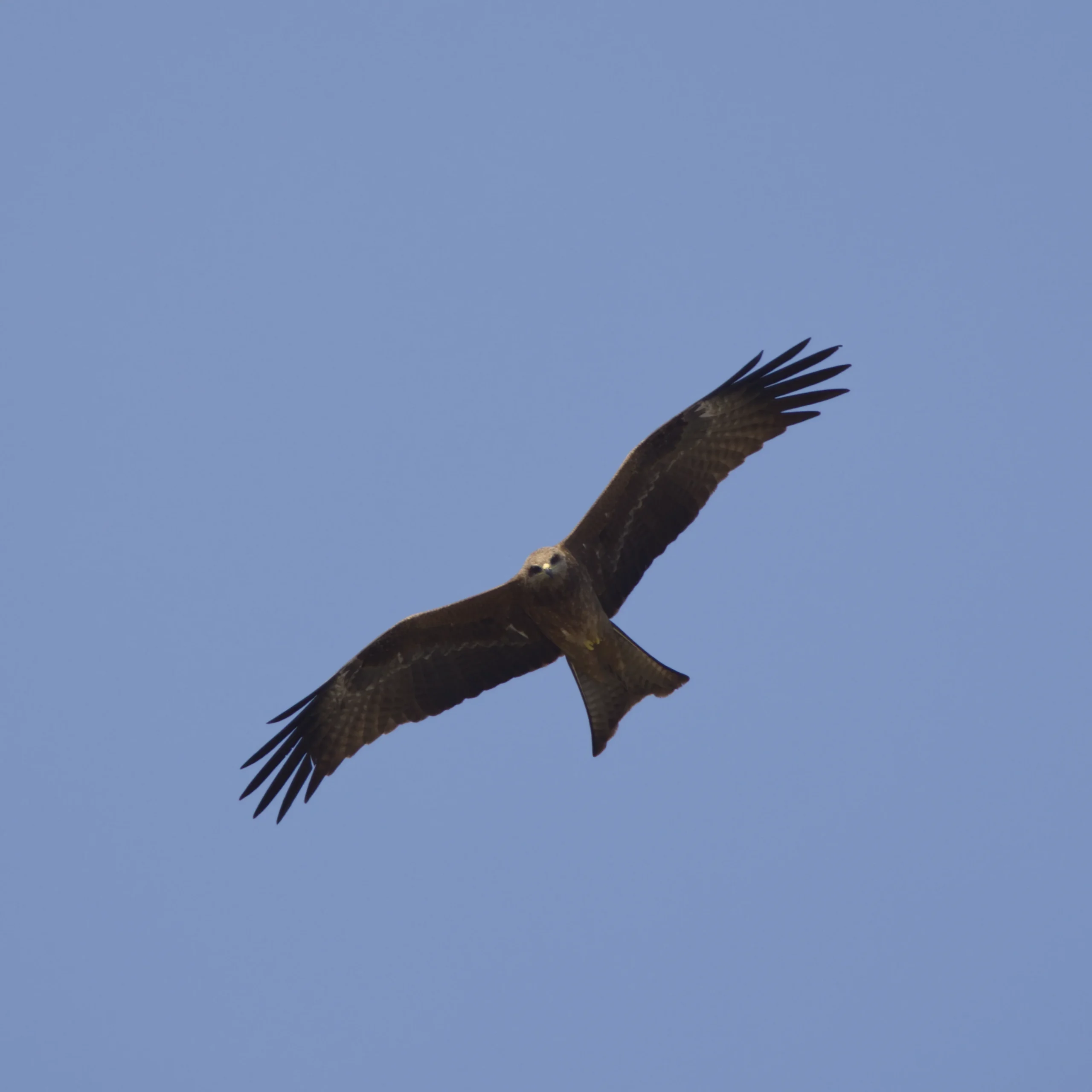
Black Kite
A medium-sized raptor with long wings and a slightly forked tail. Frequently seen soaring over settlements, wetlands, and agricultural areas.
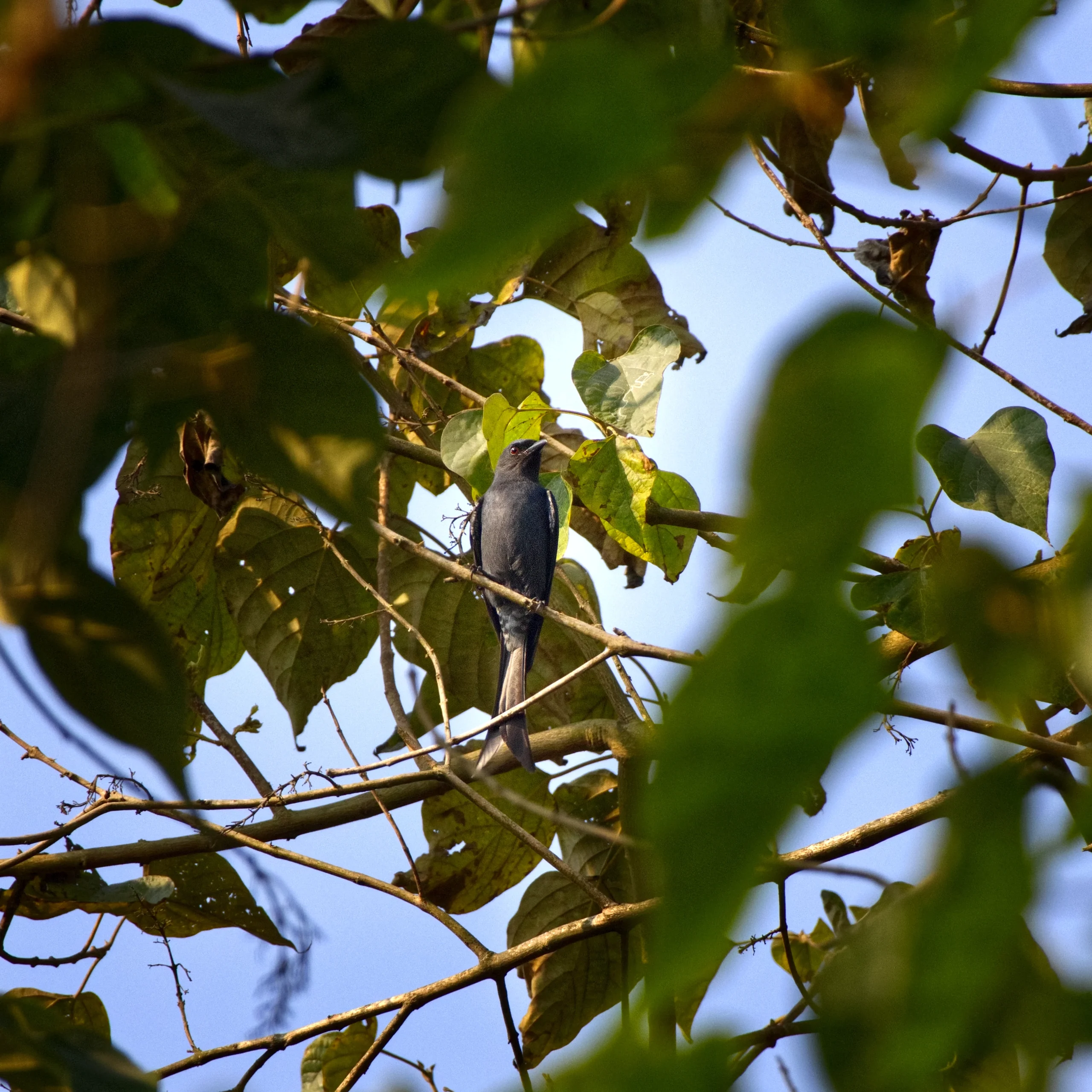
Drongo
A medium-sized passerine distinguished by its uniformly glossy black plumage and deeply forked tail. Frequently observed in open fields, grasslands, and cultivated areas where it actively hawks insects from exposed perches. Known for aggressive territorial behaviour and aerial agility.
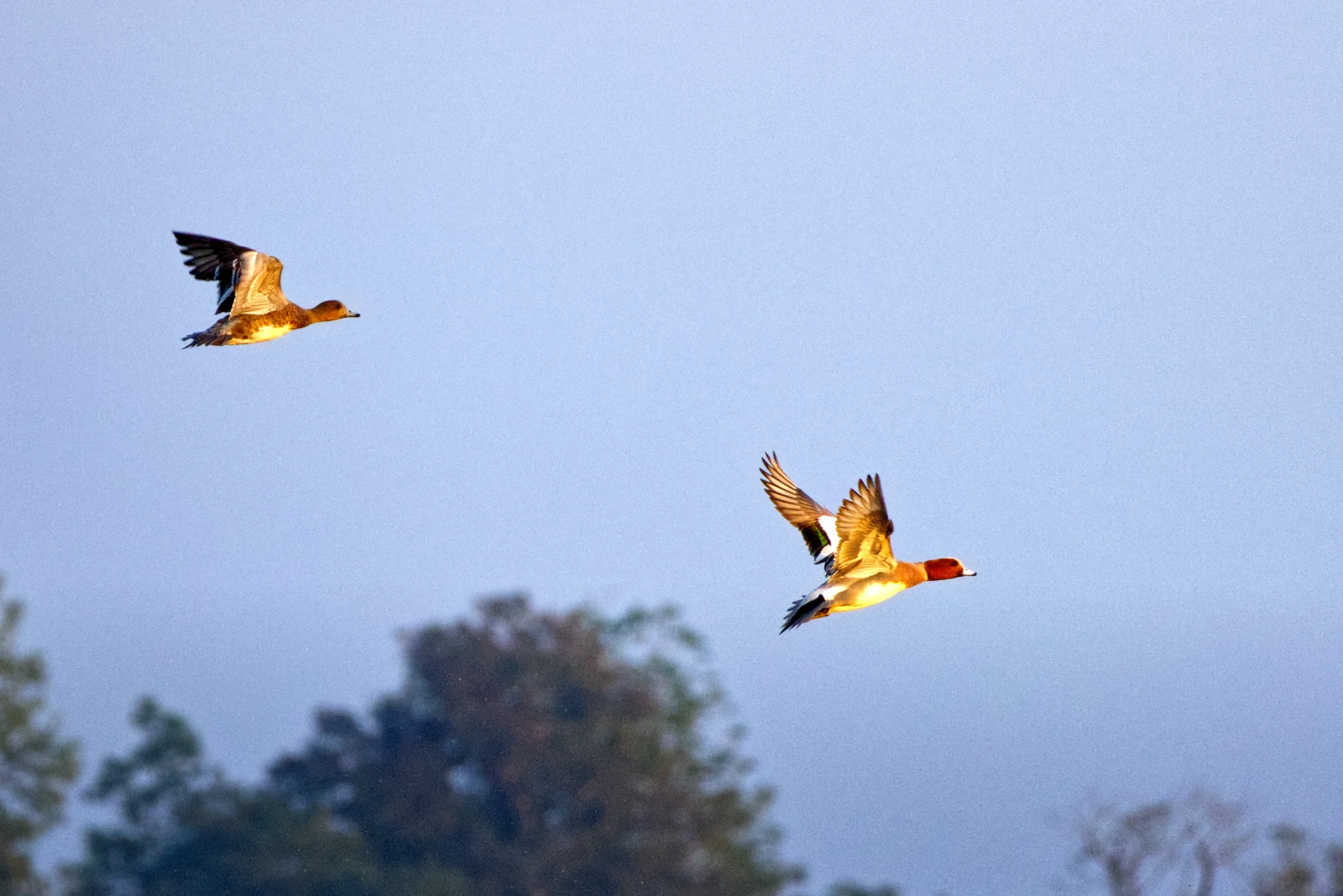
Eurasian Wigeon
A migratory dabbling duck observed in freshwater wetlands during the winter season. Adult males are distinguished by a chestnut head with a pale creamy crown stripe and grey body, while females are mottled brown with a shorter, bluish-grey bill. Typically found in shallow lakes, marshes, and flooded fields where it feeds on aquatic vegetation.
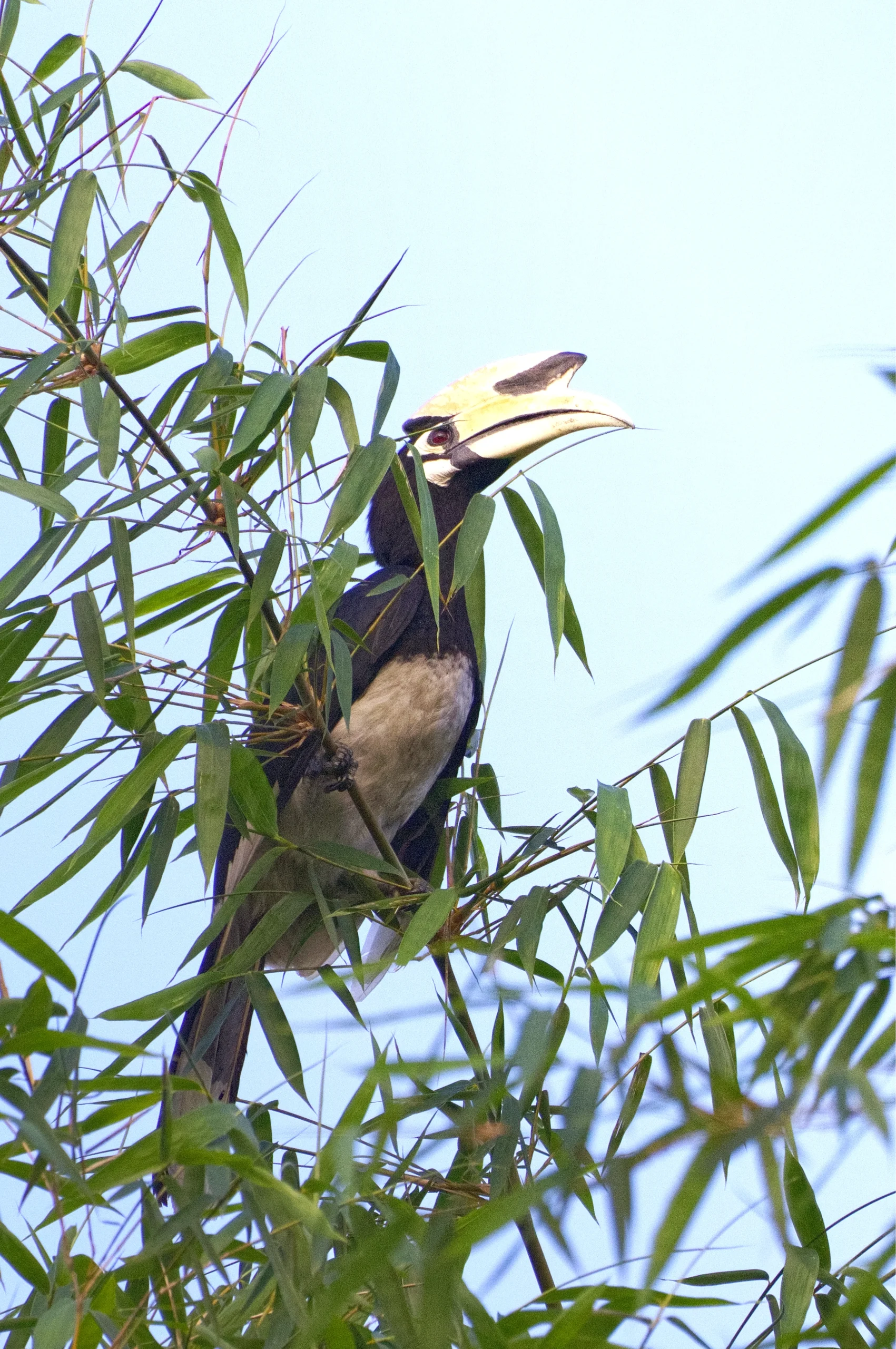
Oriental Pied Hornbill
A large hornbill distinguished by its black-and-white plumage and prominent casque. Inhabits forested landscapes and wooded areas.
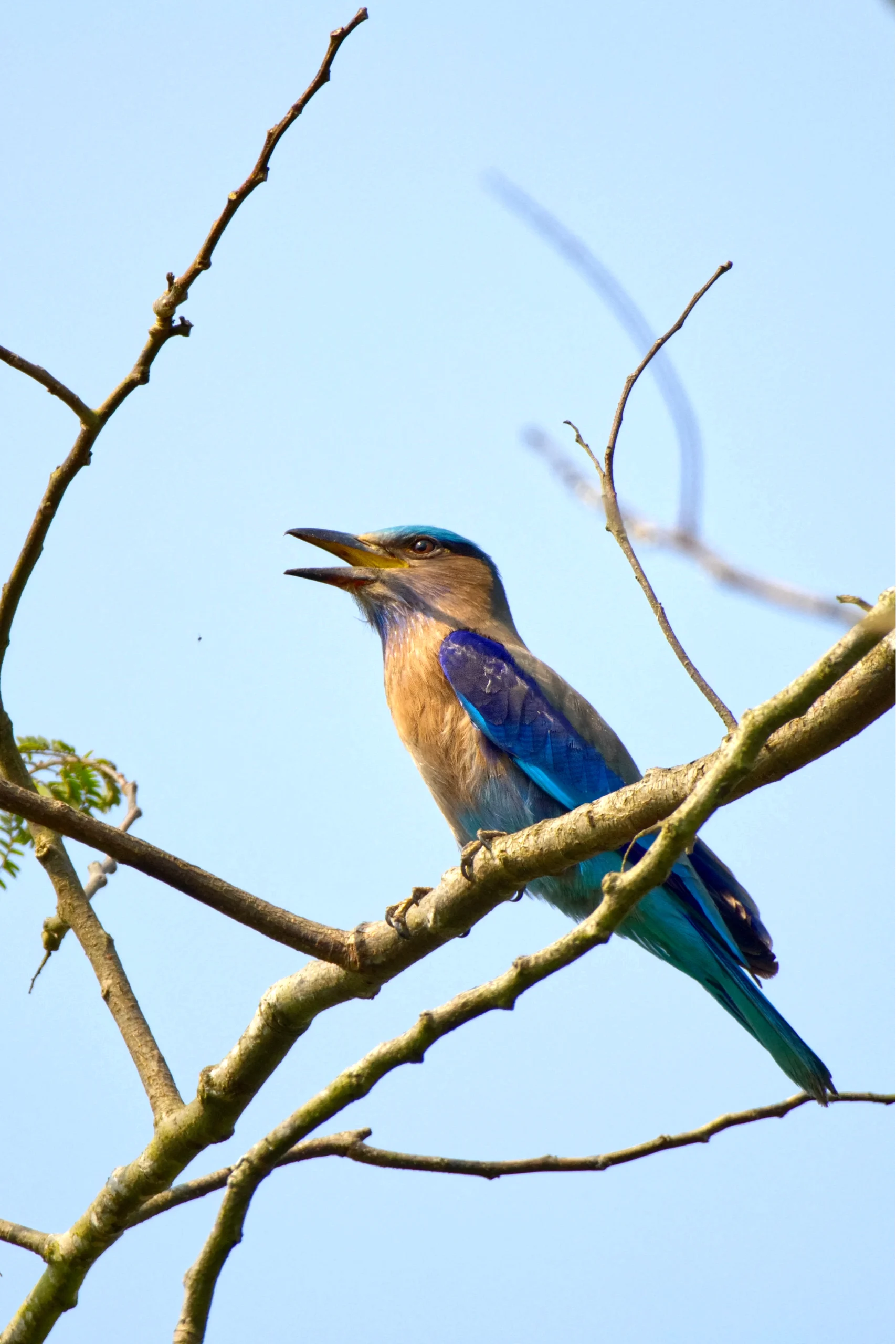
Indochinese Roller
A brightly coloured roller distinguished by blue underwings and contrasting plumage. Typically seen on exposed perches in open country.
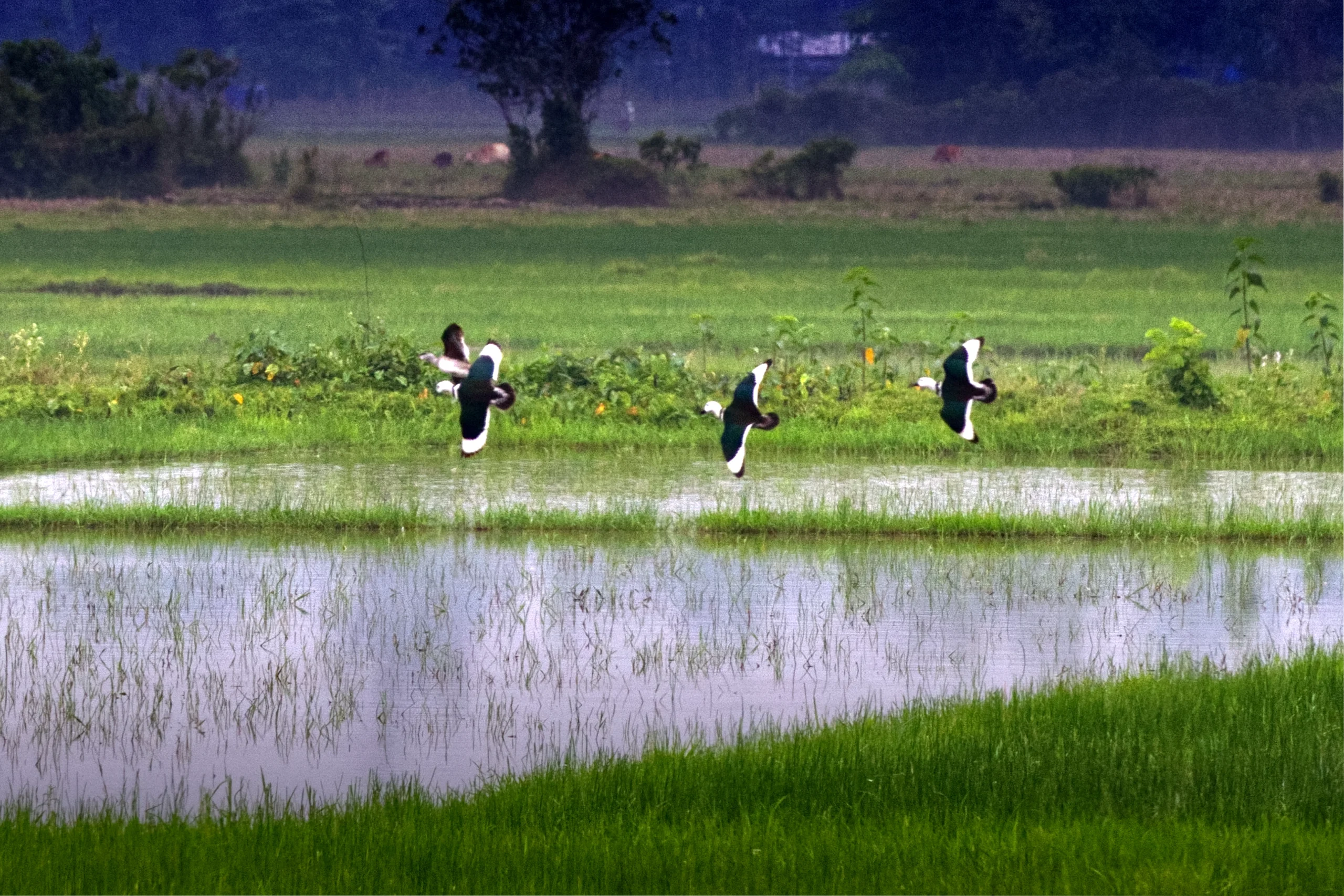
Cotton Pygmy Goose
A small perching duck associated with vegetated ponds and marshes. Males display contrasting white and dark plumage during breeding season
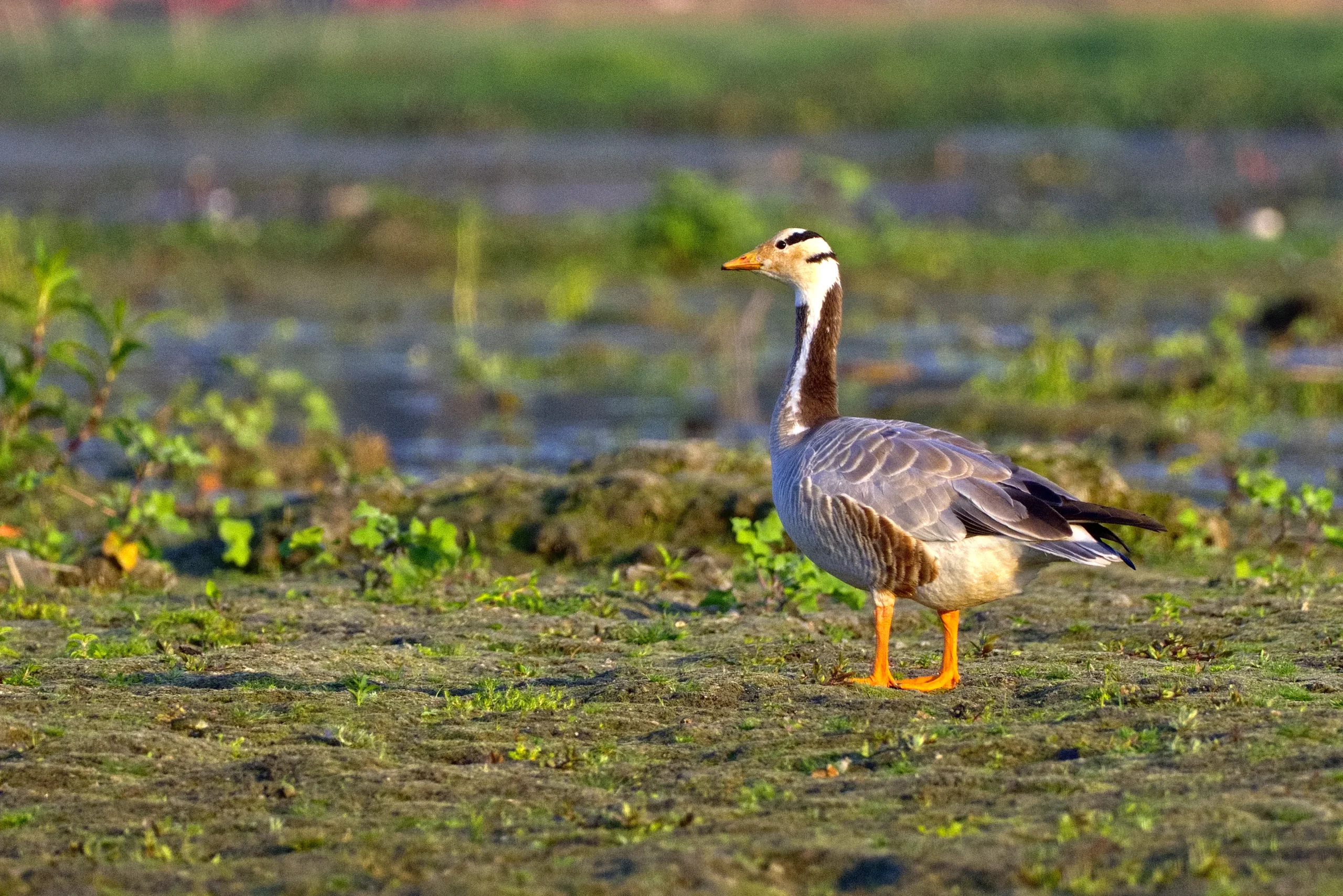
Bar Headed Goose
A migratory waterfowl identifiable by two distinct black bars across the white head. Commonly observed in open wetlands and riverine systems during winter months.
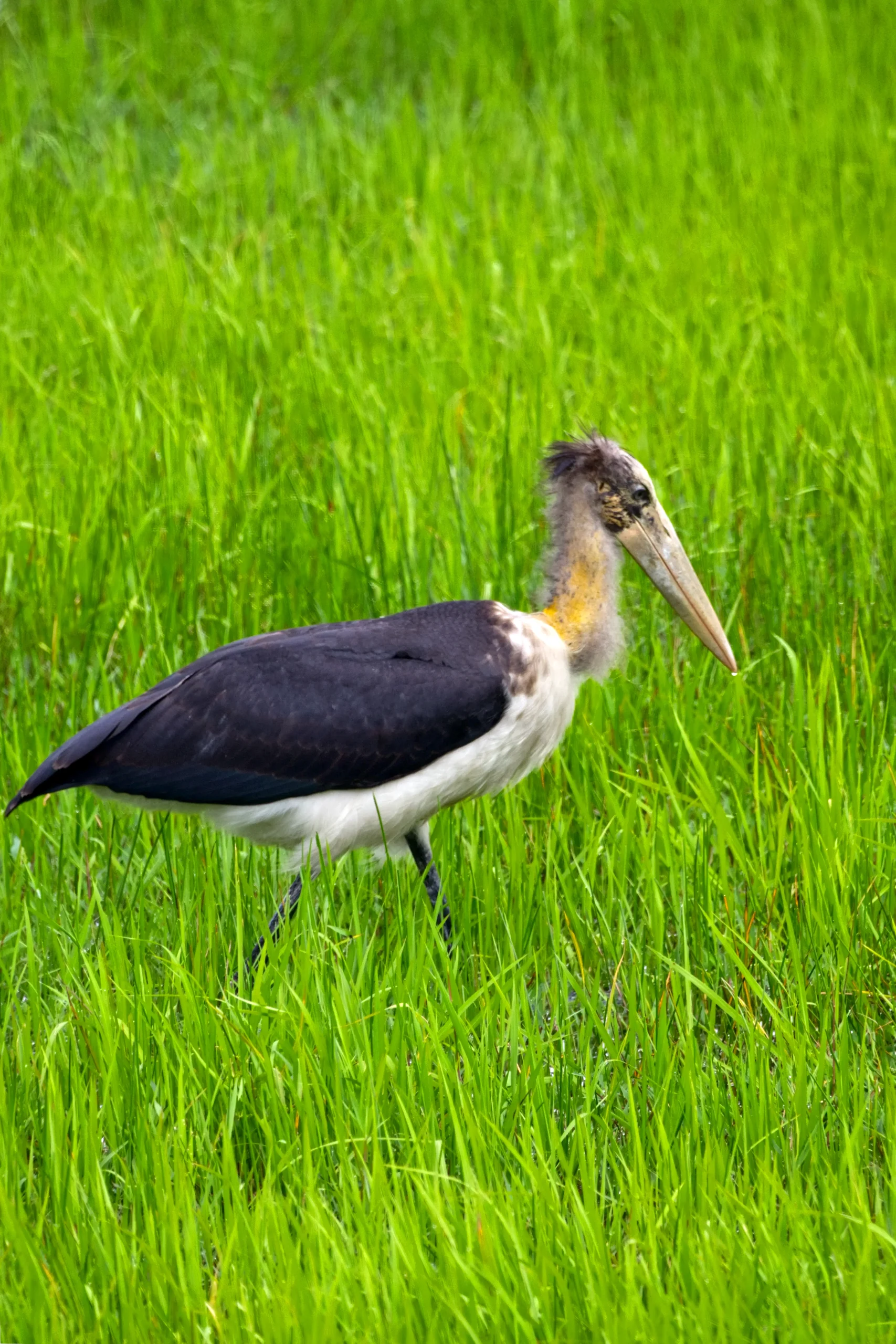
Lesser Adjuvant Stork
A large stork with bare head and neck, long bill, and heavy body structure. Associated with marshes, floodplains, and riverbanks.
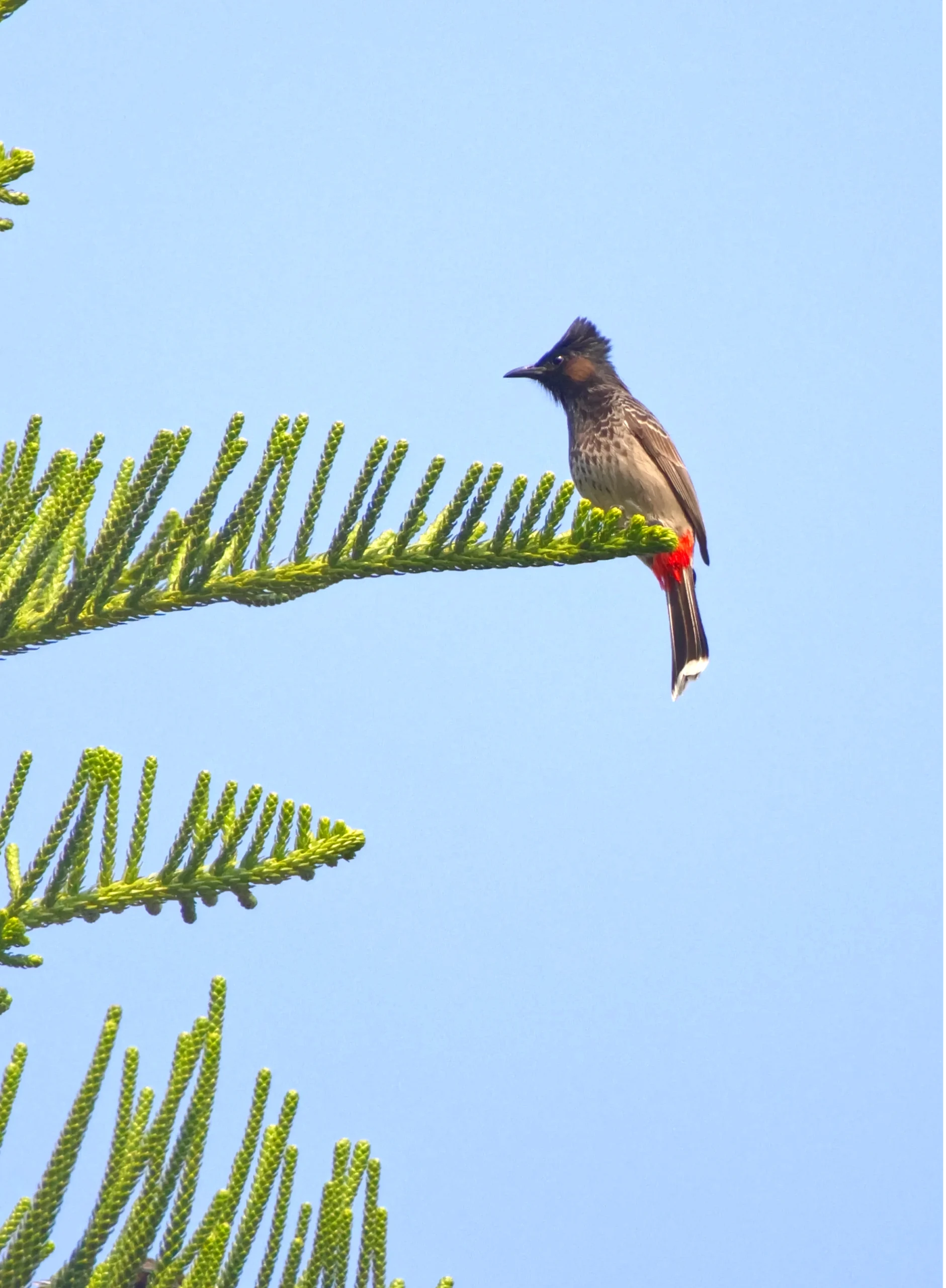
Red Vented Bulbul
A common passerine with dark plumage, crest, and characteristic red vent patch. Frequently encountered in gardens and cultivated areas.
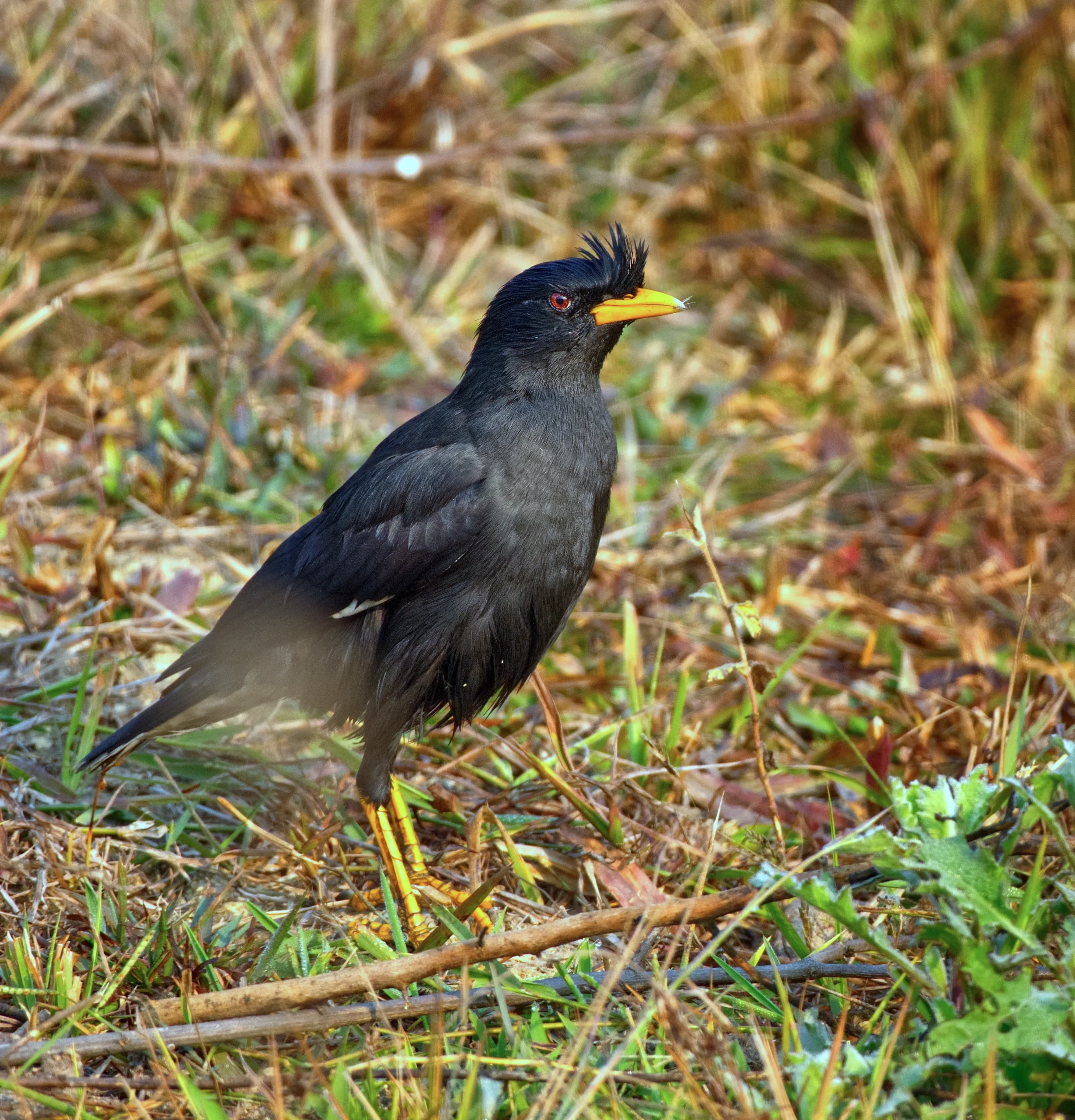
Jungle Myna
A medium-sized starling distinguished by its dusky grey-black plumage, bright yellow bill and legs, and a short erectile crest on the forehead. Frequently encountered in cultivated fields, wetlands, and peri-urban landscapes, it feeds primarily on insects, grains, and small invertebrates. Often seen in loose flocks outside the breeding season.