Home · About

The project

About the Atlas

Documenting the biodiversity of Tinsukia, fostering scientific learning, and inspiring conservation through education and community engagement.

Our mission

A living library of the region’s natural history

The Biodiversity Atlas of Tinsukia is a field-based photographic archive of the plants and animals of Tinsukia district, Assam — organised by taxonomic group and continuously growing.

It exists to make regional biodiversity knowledge more visible and useful: for students learning to identify what lives around them, for educators seeking local material, and for anyone who wants to appreciate — and help protect — the natural heritage of upper Assam.

Together, let’s appreciate and protect nature.

Indochinese Roller, a blue-winged bird, perched in the open in Tinsukia

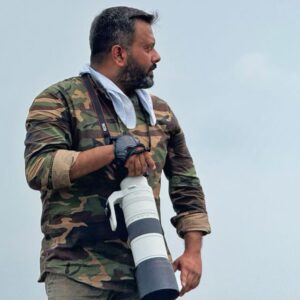
Dr. Kaushal Sood, curator of the Biodiversity Atlas of Tinsukia

The curator

Dr. Kaushal Sood

Dr. Kaushal Sood is Assistant Professor in the Department of Zoology, Tinsukia College. He combines a background in the life sciences with field photography to document Tinsukia’s natural history.

The Department provides the academic grounding for the work, while the Atlas reflects a shared commitment to biodiversity awareness and education in the region.

Profile

How the Atlas works

Principles behind every record

01

Field-based

Every entry is a species actually observed and photographed in Tinsukia district — records, not stock imagery.

02

Accuracy first

Identifications reflect careful assessment. Difficult species are flagged and kept under review rather than overstated.

03

Conservation-minded

Framing favours appreciation and protection. Precise localities of sensitive species are withheld to avoid disturbance.

04

Always evolving

New species, groups and observations are added over time as documentation across the region continues.

Support the project

Spread the Word

A lasting memory from the wild of upper Assam. Printed posters and postcards of the Atlas’s photography help sustain the documentation work.

Enquire Here →
Living archive — this Atlas is an evolving record; new species and observations are added as documentation continues.Precise localities of sensitive or threatened species are withheld to prevent disturbance.